
From the guide
Madonna della Salute in Venice: guide to the feast on 21 November
Guide to the Feast of the Madonna della Salute in Venice: origins, votive bridge, times, how to take part and practical tips for 21 November.
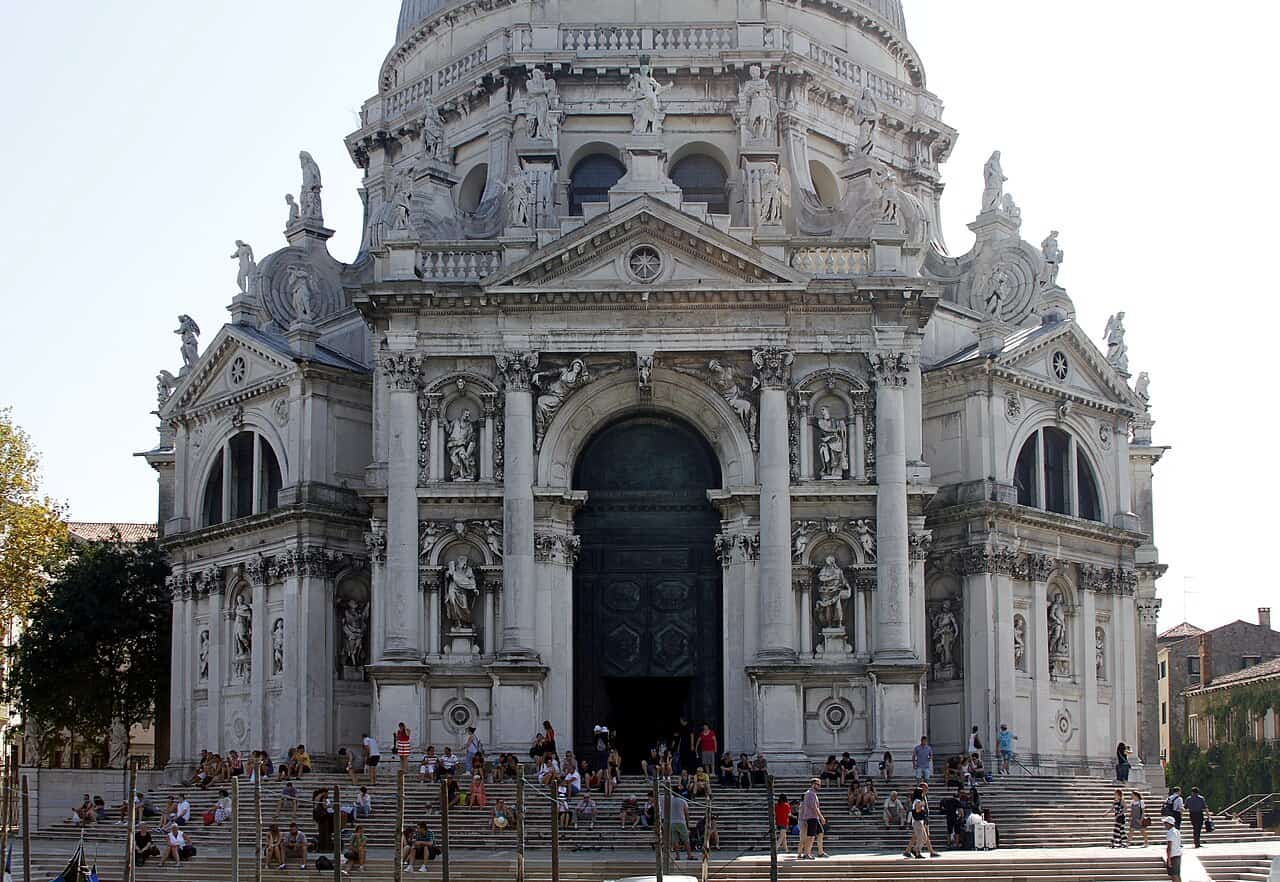
Basilica di Santa Maria della Salute, 2016. © José Luiz Bernardes Ribeiro / Wikimedia Commons · CC BY-SA 4.0. Versione ridimensionata. La foto ritrae la basilica, non la festa del 2026.
The Feast of the Madonna della Salute is one of the occasions most deeply felt by Venetians and is held again every 21 November. Verified today, 7 September 2026, the commemoration remains at the centre of the city’s religious and civic calendar: a much-attended pilgrimage, the votive bridge over the Grand Canal, celebrations in the Basilica and rites linked to the candle and personal prayer. Here is what you need to know to find your bearings, understand the meaning of the feast and plan your visit without confusing historical information with temporary updates.
Origins of a vow that still speaks to the city
The feast dates from 1630, when Venice was struck by a severe plague epidemic. According to the tradition recalled by the Municipality of Venice, the doge and the patriarch promoted a procession and, in thanksgiving for the end of the illness, the Basilica of Santa Maria della Salute was built, dedicated to the Virgin whom Venetians simply call “the Salute”. The annual commemoration falls on 21 November and is still linked to the city’s public vow today. The significance of the event is not only devotional: for many residents it is also an identity-forming ritual, passed down from generation to generation.
The occasion is also useful for those visiting Venice with a historical or cultural interest, because it allows them to read the relationship between faith, collective memory and the urban landscape. The Basilica, designed by Baldassarre Longhena, is in a striking position at the entrance to the Grand Canal and becomes the symbolic focal point of the day.
The votive bridge and the heart of the pilgrimage
One of the most recognisable elements of the feast is the floating votive bridge that connects the Santa Maria del Giglio area with the Salute. The Municipality of Venice describes this crossing as a temporary pedestrian route that accompanies worshippers and visitors towards the sanctuary and is opened in the days leading up to the celebration. The management of the temporary structures is part of the city’s organisational machine, because it is needed to ensure safety and the continuity of pedestrian flows.
For those who want to experience the atmosphere of the feast, the practical advice is to arrive early and bear in mind that the bridge can be very busy at the middle of the day. It is a moment especially suited to those who wish to observe an authentic Venetian rite, not a simple tourist event.
Dates, times and what to expect in 2026
In temporal terms, the certain date is 21 November 2026. The Patriarchate of Venice confirms that the feast is renewed every year on that day and that, normally, pilgrims arrive from all over the city and the rest of the region. The detailed programmes can change from year to year, but the fixed reference point is the solemn celebration and the pilgrimage to the Basilica. For 2026, the Youth Ministry calendar already notes the young people’s pilgrimage to the Salute on the evening of Friday 20 November, with arrival at the Basilica.
Since the exact Mass times, any changes to access and the organisation of flows may be updated close to the date, it is advisable always to check the notices from the Patriarchate and the Municipality in the days before. In general, the Basilica is made accessible with generous opening hours in the feast days and 21 November concentrates the most intense moment of the celebrations.
Practical tips for visiting the Salute in an orderly way
The feast is suitable for those seeking a very local Venetian experience, but it requires patience and attention. Those arriving with children, elderly people or people with reduced mobility should factor in possible waits and a strong public presence. It is better to wear comfortable shoes, bring water with you and plan to travel on foot, because the area between the Zattere, Santa Maria del Giglio and the Basilica can become crowded.
For those interested in the devotional dimension, the traditional gesture remains the purchase and lighting of a candle. For those looking at the feast with cultural eyes, the best time is often early morning or late afternoon, when the flow may be smoother. In any case, it is advisable to check any municipal orders on traffic and safety, which are published close to the event.
What to combine with the visit
The Feast of the Madonna della Salute can be an opportunity to experience Venice beyond the best-known San Marco circuit. After the visit to the Basilica, many choose to walk along the Zattere or continue towards Dorsoduro, an area that allows one to observe the city at a more relaxed pace. If you want to extend the day in the lagoon with an organised itinerary, you can consider an experience such as Laguna Magica, offered in the Venice Hospitality catalogue, useful for those who want to combine the feast with a broader discovery of the lagoon landscape.
For a successful stay or day out, the best idea is not to overlap too many plans: the Salute is a feast to be lived slowly, leaving space for the pilgrimage, a pause in the Basilica and a walk in the surrounding area.
Frequently asked questions
When is the Madonna della Salute celebrated in Venice?
Every year on 21 November. In 2026 the date falls on Saturday 21 November, with the preceding days devoted to approach, pilgrimages and preparations.
Where does the feast take place?
The centre of the celebration is the Basilica of Santa Maria della Salute, between the Grand Canal and the Zattere, with the votive bridge temporarily connecting the Santa Maria del Giglio area to the church.
Do you need to book to take part?
Normally entry to the feast is free, but the details may change depending on safety, numbers and liturgical programmes. It is always best to check the official notices from the Patriarchate and the Municipality in the days beforehand.
Is the feast also interesting for people who are not religious?
Yes. It is one of Venice’s strongest civic traditions and helps to understand the city through historical memory, ritual and the use of urban space.
Continue discovering Venice
Sources and updates
Information verified on 07/09/2026. Times and availability may change: always consult official sources before visiting.